
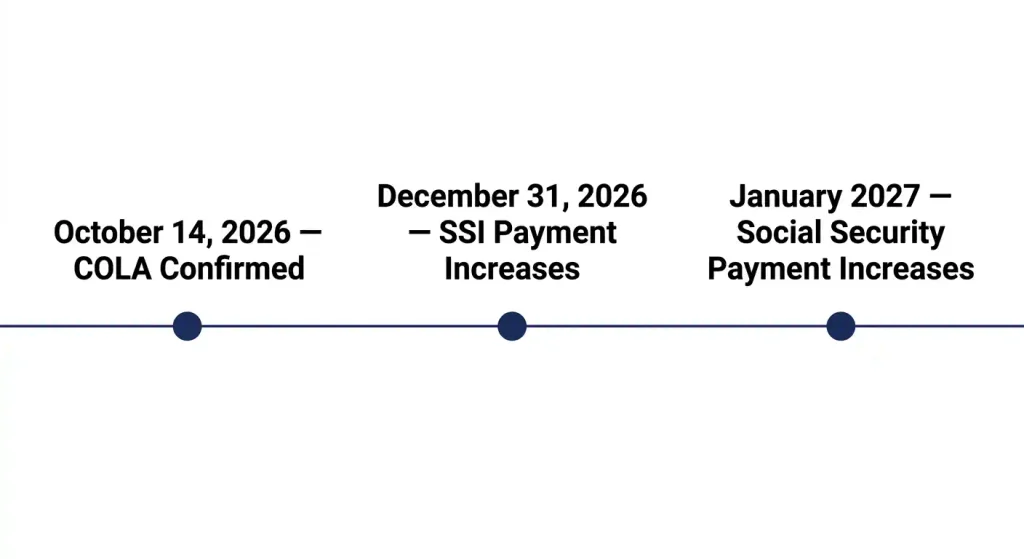
The Social Security COLA for 2027 is 3.6%, confirmed by the SSA on October 14, 2026. It raises Social Security benefits starting January 2027 and SSI payments on December 31, 2026, averaging about $75 more a month for retirees.
That figure comes from SSA’s official 2027 COLA Fact Sheet, calculated using CPI-W data comparing third-quarter 2025 and 2026.
Most beneficiaries will see less than the full raise once Medicare Part B premiums are deducted.
What Is the Social Security COLA for 2027?
2027 COLA at a Glance
| Detail | 2027 |
|---|---|
| COLA percentage | 3.6% |
| Announced | October 14, 2026 |
| Effective month | January 2027 (SSI starts December 31, 2026) |
| Average retiree increase | About $75/month |
| Programs covered | Social Security retirement, SSDI, survivor benefits, SSI |
Your personal check amount is still an estimate until your official notice arrives.
How Does the 2027 COLA Compare With 2026?
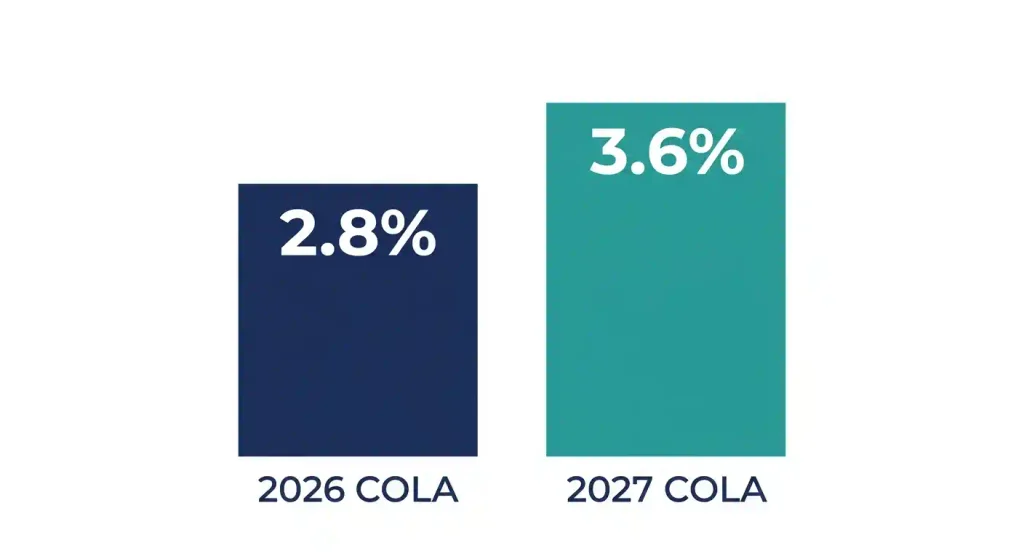
The 2026 COLA was 2.8%, so 2027’s 3.6% is a full point higher, good news in dollar terms. But a bigger percentage doesn’t guarantee your money stretches further. The COLA tracks inflation on paper, not your actual costs, so a 3.6% raise can still feel tight if rent, groceries, or health care rose faster.
Other numbers move too. The 2027 Social Security taxable maximum, the wage cap for Old-Age, Survivors, and Disability Insurance (OASDI) tax, rises to $192,300 from $184,500. The Social Security retirement earnings test also updates: $25,560 for people under full retirement age all year ($1 withheld per $2 over), or the higher 2027 Social Security earnings limit of $67,920 for people reaching full retirement age during 2027 ($1 per $3 over, before that month). Per Social Security COLA history, these wage-linked numbers track national wage growth, not the CPI-W behind the COLA, so they can move at different paces.
How Much Will Your Social Security Check Increase in 2027?
Multiply your current benefit by 1.036 for your new gross amount. That’s not your deposit: Medicare premiums and tax withholding come out after, so your real increase is usually smaller than the math below suggests.
Calculate Your New Monthly Social Security Benefit
| Current Benefit | Estimated Increase | New Monthly Benefit |
|---|---|---|
| $1,000 | $36 | $1,036 |
| $1,500 | $54 | $1,554 |
| $2,000 | $72 | $2,072 |
| $2,500 | $90 | $2,590 |
These are simple estimates. SSA rounds to the nearest dollar and factors in your benefit history, so your real number could land a dollar or two off.
How Much More Could You Receive Over a Full Year?
Multiply your monthly increase by 12 for the yearly impact: a $72 bump adds up to $864 a year. Your first year might not align exactly with January through December, and this gross gain can shrink after Medicare premiums or other deductions.
Why Might Your Increase Differ From the Average $75?
The $75 figure is an average, not a promise. A $1,200 benefit gets roughly $43 more; a $3,200 benefit gets closer to $115 more. Your starting benefit always drives the dollar amount, and things like benefit withholding or overpayment recovery can change what hits your account separately from the COLA.
When Will You Receive the First Increased Social Security Payment?
Increased Social Security retirement, disability, and survivor benefits start with January 2027 payments. SSI differs: since it pays on the first and January 1, 2027 is a holiday, the increased SSI payment arrives December 31, 2026.
Social Security Payment Dates for January 2027
Your payment date depends on your birth date and when you started collecting. Most beneficiaries are paid the second, third, or fourth Wednesday, based on birthday. Those who started before May 1997, or who also get SSI, are usually paid on the third. Check SSA’s official payment calendar for your date.
Why Does SSI Increase Before Social Security Retirement Benefits?
SSI pays on the first of the month; if that’s a weekend or holiday, SSA moves it earlier. Since January 1, 2027 is a holiday, that payment lands December 31, 2026. It’s a calendar quirk, not an extra payment or bigger raise. If you get both SSI and Social Security, your SSI updates first and Social Security follows on the January schedule.
What If Your Increased Payment Does Not Arrive When Expected?
Give it three business days past your scheduled date before worrying. Check your bank account, your payment date on the SSA calendar, and your personalized COLA notice for the exact amount. Still missing? Contact SSA directly. Never share your Social Security number, bank details, or personal information with a caller or site claiming they can “release” or “speed up” your payment; these are common Social Security COLA scams. Watch for unofficial calculators or posts citing a different percentage or date than SSA confirmed; SSA.gov is the only source that matters.
How Will the 2027 COLA Affect Your Medicare Premiums and Take-Home Benefit?
Most Medicare Part B premiums come straight out of your Social Security check, so your gross COLA increase and your deposit increase differ. The official 2027 Part B premium isn’t announced yet; Medicare’s trustees project around $209.50 a month, up from $202.90 in 2026, but treat that as an estimate until CMS confirms it.
Will Medicare Part B Premiums Reduce Your COLA Increase?
Yes, for most beneficiaries. If your premium rises $6 to $7 and your COLA raise is $75, you’d pocket only $68 to $69. It’s not disappearing, it’s being absorbed by a rising Medicare cost before you see the deposit. The premium figure above isn’t final; confirm it through Medicare.gov once CMS releases the official number.
How to Calculate Your Benefit After Medicare Deductions
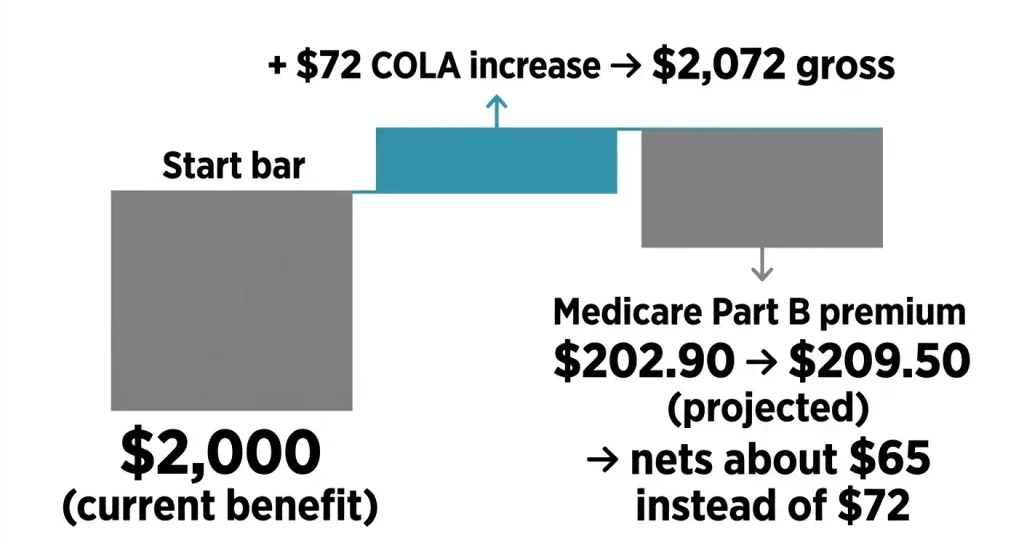
Subtract your Part B premium from your new gross benefit. Example: a retiree going from $2,000 to $2,072 gross, with the premium rising from $202.90 to a projected $209.50, nets about $65 instead of $72. Your math will differ based on your premium tier and income related adjustments.
What Other Deductions Can Affect Your Social Security Deposit?
Part B premiums are the most common deduction, but not the only one. Others include:
- Voluntary federal tax withholding (a higher gross benefit can also push more of your Social Security taxable benefits over the IRS thresholds that decide how much gets taxed)
- Court ordered garnishments
- Medicare Advantage or Part D premiums
- Earnings-related withholding if you work while collecting early
Deductions vary, so two people with identical gross benefits can get different deposits, though none of this changes your official COLA percentage.
Where to Check Official 2027 Medicare Costs
Medicare.gov and the Centers for Medicare & Medicaid Services will publish the final Medicare Part B premiums 2027 figure, deductible, and income related adjustment amounts once official. Your personalized SSA notice shows the exact premium for your check, your most reliable number.
Who Qualifies for the 2027 Social Security COLA?
The COLA applies automatically to Social Security retirement, disability, survivor benefits, and SSI, with no new application needed. Each benefit type keeps its own eligibility rules; the COLA just adjusts the dollar amount once you qualify.
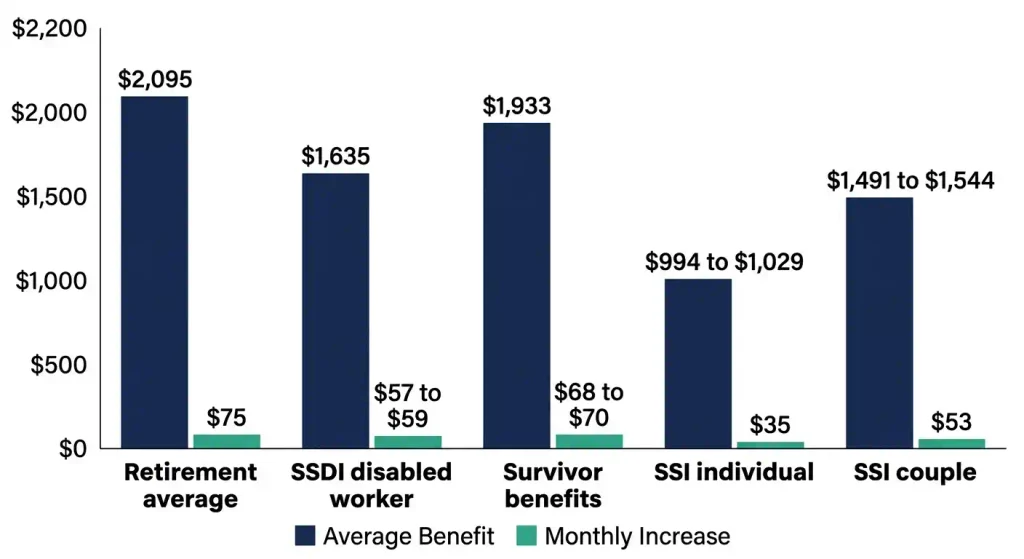
| Benefit Type | Average Benefit | Monthly Increase |
|---|---|---|
| Retirement (average) | ~$2,095 | ~$75 |
| SSDI (disabled worker) | ~$1,635 | ~$57–$59 |
| Survivor benefits | ~$1,933 | ~$68–$70 |
| SSI, individual | $994 → $1,029 | $35 |
| SSI, couple | $1,491 → $1,544 | $53 |
Social Security Retirement Benefits
Anyone currently receiving retirement benefits gets the 3.6% adjustment on their existing amount. If you started collecting in late 2026, the COLA applies to the benefit you locked in, not a future higher amount; it’s a cost of living bump, not a recalculation of your earnings record.
Social Security Disability Insurance (SSDI)
SSDI recipients get the same 3.6% increase as retirees. The average disabled worker’s benefit, around $1,635, rises roughly $57 to $59 a month. If you’re on SSDI and Medicare, the same Part B deduction rules apply.
Survivor Benefits for Spouses and Children
Widows, widowers, and eligible children collecting survivor benefits also get the 3.6% raise. The average survivor benefit, close to $1,933, rises about $68 to $70 a month, though yours will differ since survivor amounts vary with the deceased worker’s earnings record.
Supplemental Security Income (SSI)
The 2027 federal SSI payment standard rises to $1,029 for an individual and $1,544 for a couple, up from $994 and $1,491. That’s not always what you get: your state, living situation, and other income can raise or lower your actual payment.
People Receiving Both SSI and Social Security
If you get both, the COLA raises each separately, but SSI counts most of your Social Security income against its formula, so a bigger check can lower your SSI portion. Your combined increase is usually smaller than adding both raises together. The same logic applies elsewhere: a higher gross benefit can push your countable income over the limit for SNAP or Medicaid, so this COLA effect on means-tested benefits is worth checking.
How Is the 2027 Social Security COLA Calculated?
SSA bases the COLA on the Consumer Price Index for Urban Wage Earners and Clerical Workers (CPI-W), comparing its average for the third quarter of 2025 against the third quarter of 2026. The percentage difference becomes next year’s COLA, exactly as the Social Security Act requires, with no discretion involved.
What Is the CPI-W?
CPI-W is published monthly by the U.S. Bureau of Labor Statistics (BLS), tracking prices for food, housing, transportation, and medical care. Only the July, August, and September readings feed the COLA formula. It’s a national average, not your personal grocery bill or city’s cost of living.
Does the COLA Keep Up With Retirees’ Actual Living Costs?
Not always. CPI-W weights spending for younger working adults, not retirees, so health care and housing (a bigger share of retiree budgets) get no extra weight. The COLA offsets general inflation, not every retiree’s exact expenses.
How to Find Your Official 2027 Social Security Benefit Amount
Skip online calculators once your real notice is available. SSA sends every beneficiary a personalized COLA notice with their exact new amount and deductions.
Check Your COLA Notice Through my Social Security
Log into your account at ssa.gov/myaccount and check your my Social Security Message Center. Most can view their COLA notice online in early December, ahead of the January payment. Without online-only notices, SSA mails a paper notice around the same time.
What Information Does the COLA Notice Include?
Your notice lists your new gross benefit, Medicare premium (if any), payment date, and final net payment. Compare it to your current deposit; it’s more reliable than any public calculator since it reflects your actual record and deductions, not an average.
What If Your Notice and Bank Deposit Do Not Match?
Check your payment date and listed deductions first; a timing difference, backdated adjustment, or separate benefit change can explain a mismatch. Still off? Contact SSA directly instead of guessing.
Common Myths About the 2027 Social Security COLA
Confusion around every COLA announcement comes from treating averages and headlines as personal guarantees.
Myth: Everyone Receives an Extra $75 Per Month
The $75 figure is only the average for retired workers, not what everyone gets. A $1,100 benefit sees about $40 more; a $3,500 benefit sees about $126 more. SSDI and SSI start from different averages, so applying the retiree figure to those programs is always wrong.
Myth: A 3.6% COLA Means Your Deposit Rises by 3.6%
Your gross benefit rises 3.6%. Your deposit doesn’t, if Medicare premiums come out of your check, since the expected 2027 Part B rise absorbs part of that increase first.
Myth: You Must Apply to Receive the COLA
The COLA is automatic for every eligible beneficiary; no form, call, or signup needed. Still review your notice to confirm the amount, and never pay a third party claiming it can get you a bigger or faster payment. That’s a scam.
Myth: A Higher COLA Guarantees Greater Purchasing Power
A bigger percentage doesn’t mean your money goes further, which matters most for fixed-income retirement budgeting. The COLA reflects national average inflation, not your personal cost of living, so a 3.6% raise, the largest since 2023, can still leave you behind if your expenses rose faster than CPI-W.
Frequently Asked Questions About Social Security COLA 2027
What is the official Social Security COLA for 2027?
The SSA confirmed a 3.6% cost of living adjustment on October 14, 2026.
How much will my $2,000 Social Security check increase in 2027?
A $2,000 benefit rises about $72 a month before deductions, to roughly $2,072.
When will the first increased Social Security payment arrive?
Social Security retirement, disability, and survivor benefits reflect it starting January 2027. SSI recipients see it first, on December 31, 2026.
Will Medicare Part B premiums cancel out my COLA increase?
They’ll reduce it for most beneficiaries but likely won’t cancel it out. The exact impact depends on the official 2027 Part B premium, not yet confirmed.
Does the 2027 COLA apply to SSDI and survivor benefits?
Yes. Both get the same 3.6% increase as retirement benefits, though the dollar amount depends on each person’s existing benefit.
How do I find my exact new benefit amount?
Check your personalized COLA notice through your my Social Security account, typically available online in early December.
Can my SSI payment change even after the COLA?
Yes. SSI can shift based on income, living arrangement, or other benefits, separate from the COLA.
Where can I verify the official 2027 COLA and Medicare costs?
Use SSA.gov for official COLA figures and Medicare.gov for confirmed 2027 Medicare premium and deductible amounts, for the correct benefit year.
Key Takeaways: Plan Your Budget Around Your 2027 Benefit
The 2027 COLA is a confirmed 3.6% increase, the biggest since 2023, starting with January 2027 Social Security payments and the December 31, 2026 SSI payment. Check your personalized notice for your exact amount and deductions, and budget around your real net deposit, not the headline percentage. For more on how federal and state payroll deductions work together, browse our California payroll tax guides.

Yeasin Sorker is the founder of Paycheck Calculator California. He built this tool in 2018 after noticing that most free paycheck calculators missed California-specific rules like daily overtime and the uncapped SDI rate.
He researches California payroll tax updates regularly and keeps this calculator aligned with the latest IRS, FTB, and EDD published rates. All calculations on this site are estimates based on official 2026 government sources. For personalized tax advice, consult a qualified tax professional.